Cell
A cell is the basic structural and functional unit of every living organism, and new cells are produced by the division of existing cells 1.
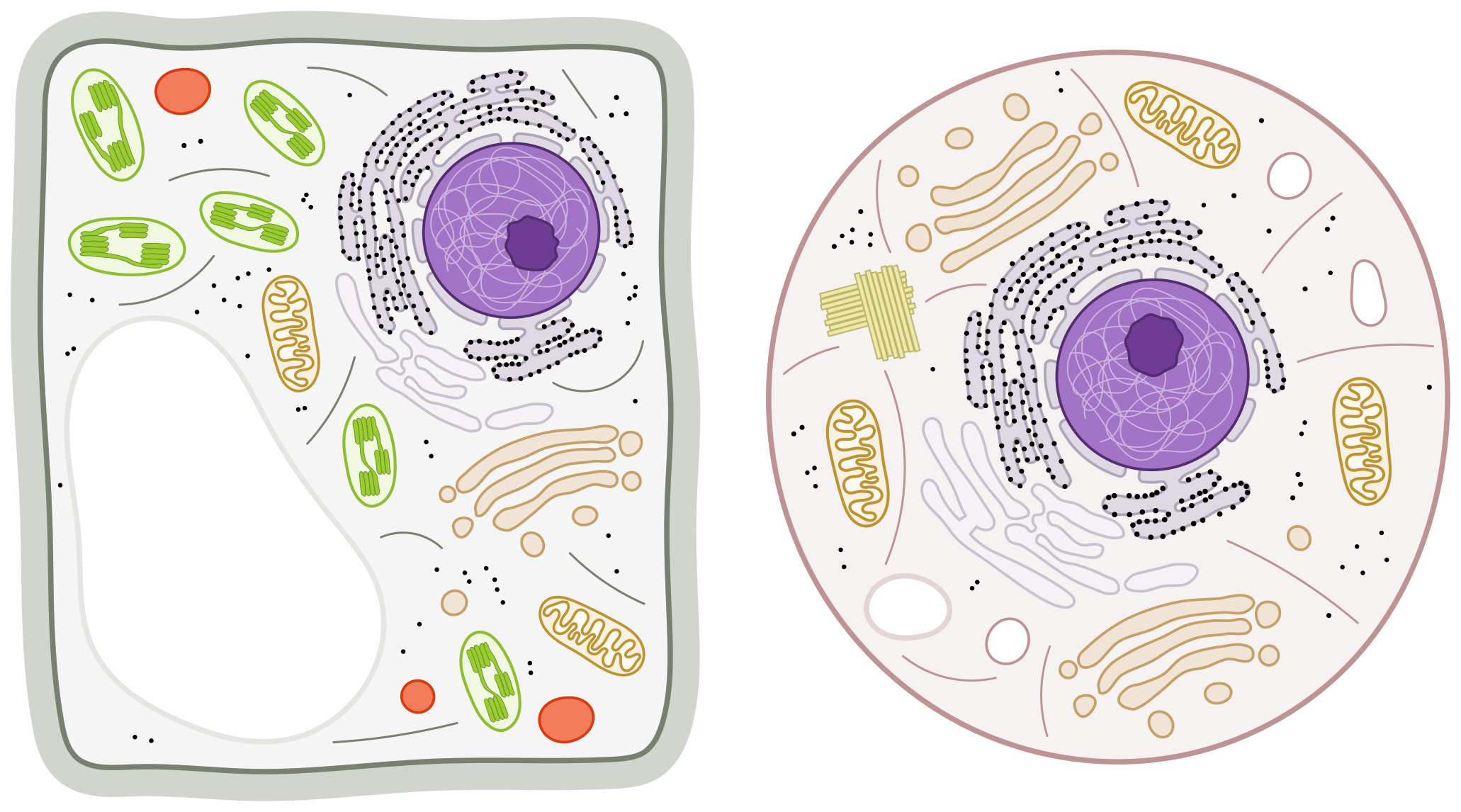
Only the plant cell has a wall, chloroplasts and a large vacuole 2.
Structures Compared
| Structure | Plant cell | Animal cell | Bacterial cell |
|---|---|---|---|
| Cell wall | Cellulose | Absent | Present |
| Cell membrane | Present | Present | Present |
| Nucleus | Present | Present | Absent (circular DNA) |
| Cytoplasm | Present | Present | Present |
| Ribosome | Present | Present | Present |
| Mitochondrion | Present | Present | Absent |
| Chloroplast | In photosynthetic cells | Absent | Absent |
| Vacuole | Large, permanent | Small, temporary | Absent |
Specialised Cells
Specialised cells have specific functions: ciliated cells (mucus movement), root hair cells (absorption), palisade mesophyll cells (photosynthesis), red blood cells (oxygen transport) and gametes — sperm and egg cells 1.
Related
- Cell Membrane - Controls entry and exit.
- Nucleus - Contains the genetic material.
- Cytoplasm - Where reactions occur.
- Ribosome - Site of protein synthesis.
- Mitochondrion - Site of respiration.
- Biology - Cambridge IGCSE area.
Footnotes
-
Cambridge IGCSE Biology 0610 syllabus for examination in 2026, 2027 and 2028 - Cell structure (2.1.1-2.1.4), cell division (2.1.5), specialised cells (2.1.6), organisation (2.1.7). ↩ ↩2
-
Simple plant and animal cell comparison by Tomas Kebert and umimeto.org, CC BY-SA 4.0, unmodified. ↩
