Turgor Pressure
Turgor pressure is the pressure of the water inside a plant cell pushing outwards on the cell wall, making the cell turgid 1.
It builds up as water enters by osmosis and fills the large vacuole. The cellulose wall is strong and pushes back, so the pressure is balanced and the cell keeps its shape instead of bursting 2. This is why plant cells can safely take in far more water than an animal cell, which may burst 2.
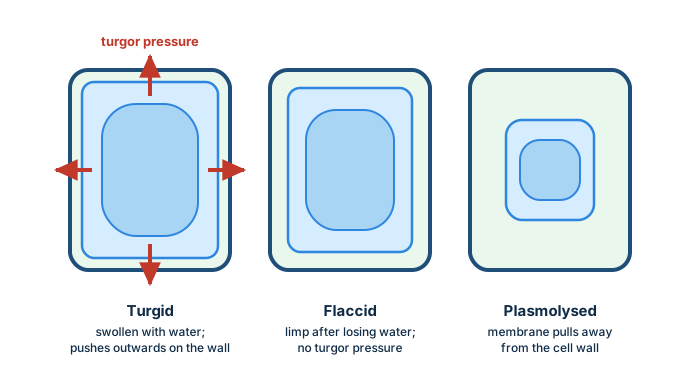
Turgid (left): water in the vacuole pushes outwards on the wall 3.
Importance
Turgor pressure keeps plant cells firm and holds soft tissues upright, supporting leaves and young stems 1. When cells lose water, turgor pressure falls, they go flaccid and the plant wilts; further water loss causes plasmolysis.
Related
- Turgid - The state produced by turgor pressure.
- Flaccid - The state when turgor pressure is lost.
- Plasmolysed - The state after further water loss.
- Cell Wall - The wall that resists the pressure.
- Small Vacuole - The water store that creates the pressure.
- Osmosis - How the water enters.
- Biology - Cambridge IGCSE life-science area.
Footnotes
-
Cambridge IGCSE Biology 0610 syllabus for examination in 2026, 2027 and 2028 - The terms turgid, turgor pressure, plasmolysis and flaccid (3.2.8), and plants supported by water pressure pressing outwards on the cell wall (3.2.6). ↩ ↩2
-
OpenStax Biology 2e - Passive Transport - Turgor pressure in plant cells, tonicity, plasmolysis and wilting. ↩ ↩2
-
Diagram drawn for this bundle, comparing turgid, flaccid and plasmolysed plant cells. ↩